
The Way You Are Not Seen
Society spends a lot of time trying to make him “fit”…

Hi,
I’ve been going through a bit of a time lately on the caregiver front. I’ve been battling the special-needs social care system over my autistic son’s education, advocating for what’s best for him, not what’s most convenient for them.
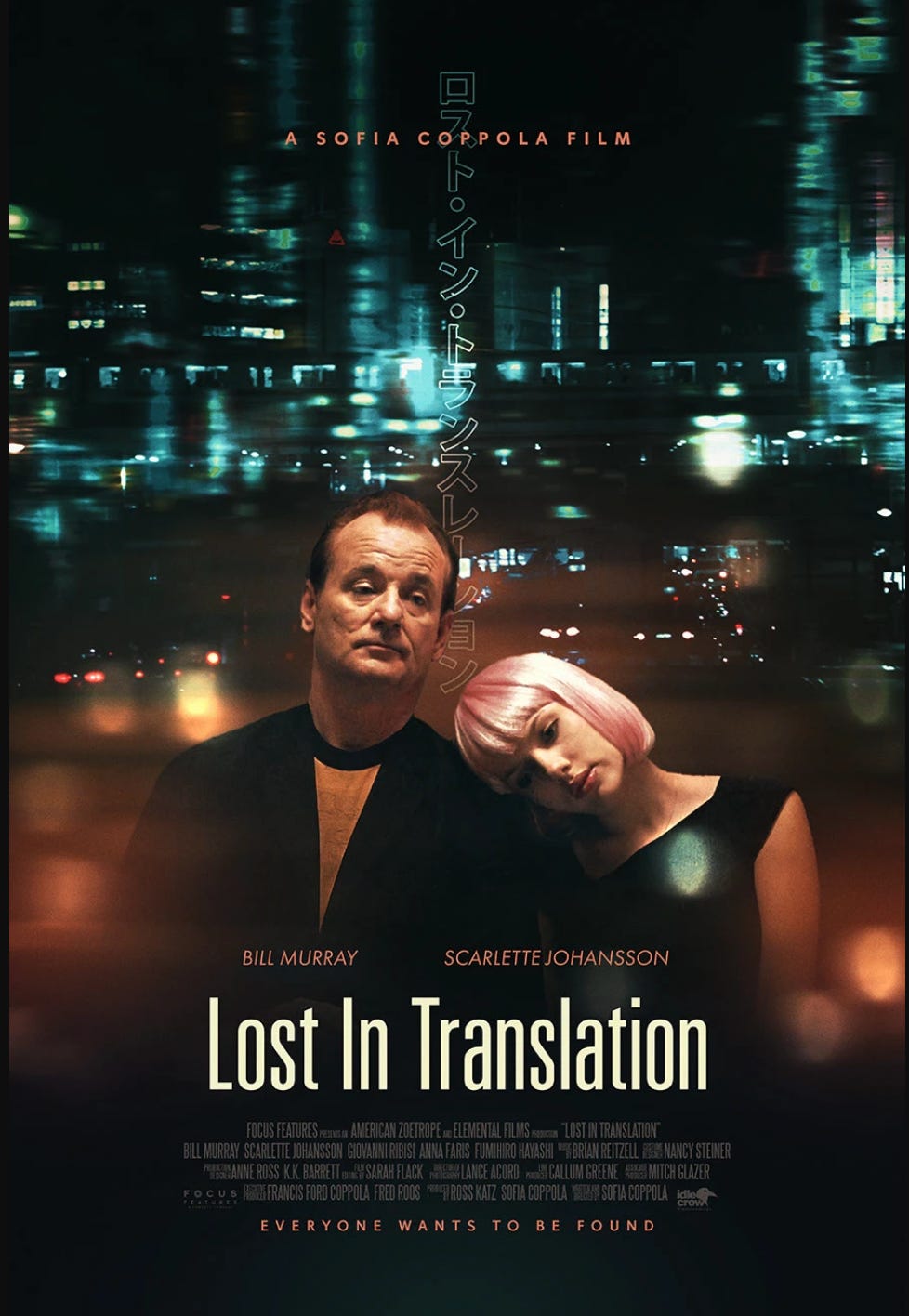
A few days ago, I stumbled across a video discussing the 2003 film “Lost in Translation” directed by Sofia Coppola. I saw it years ago and remember thinking it was quietly brilliant. It’s about connection. Two strangers who form an intimate yet fleeting undefined bond. Looking back now, there are elements that didn’t trouble me then but might today.. especially since I now have a young daughter, only a few years older than the female character, who was seventeen, opposite a fifty-two-year-old man.
Nevertheless, the film felt almost groundbreaking at the time in its emotional stillness, a contemplative space set in Tokyo, no less. I’m always drawn to character-driven films, often European and independently made… films that make you THINK!. If you haven’t seen it, see it. It really is brilliant. I’ve just realised it’s streaming in the UK on Amazon Prime, and I’ll be watching it again, twenty-three years later. That can’t be right… honestly, where did the time go?
Anyway, slight tangent, but bear with me.
The film’s themes of loneliness, connection, and those strange in-between spaces got me thinking about my son. He is severely autistic and non-verbal, and I often wonder how the world looks to him. Does he feel connected? What does he make of it all?
I’d like to believe he has a strong emotional connection with his family, that he’s happy, that he feels safe, and, most importantly, that he knows he is loved. So loved. And I truly believe he feels that.
But.
Society spends a lot of time trying to make him “fit”… into a role, into a set of criteria, into how it thinks he should behave. A world so different, so foreign from the inner world he actually lives in.
To some degree, I include myself in this. Albeit, less so, because I’m up close and personal with him. I know how he moves through life, what he can and cannot cope with emotionally, never mind adhering to cultural norms or aesthetics.
He’s eighteen now, and over his lifetime I’ve filled out hundreds of forms, each demanding categories and outcomes that, at a grassroots level, will never truly apply to him. I always find myself writing things like: “yes, I’d like him to achieve X.. to the best of his ability, within reason” etc.
Which brings me to one question.
What happens if my son is seen, truly seen, and then allowed to live as he does, to the best of his ability? Living and loving life where everything he has, and everything he is, is enough?
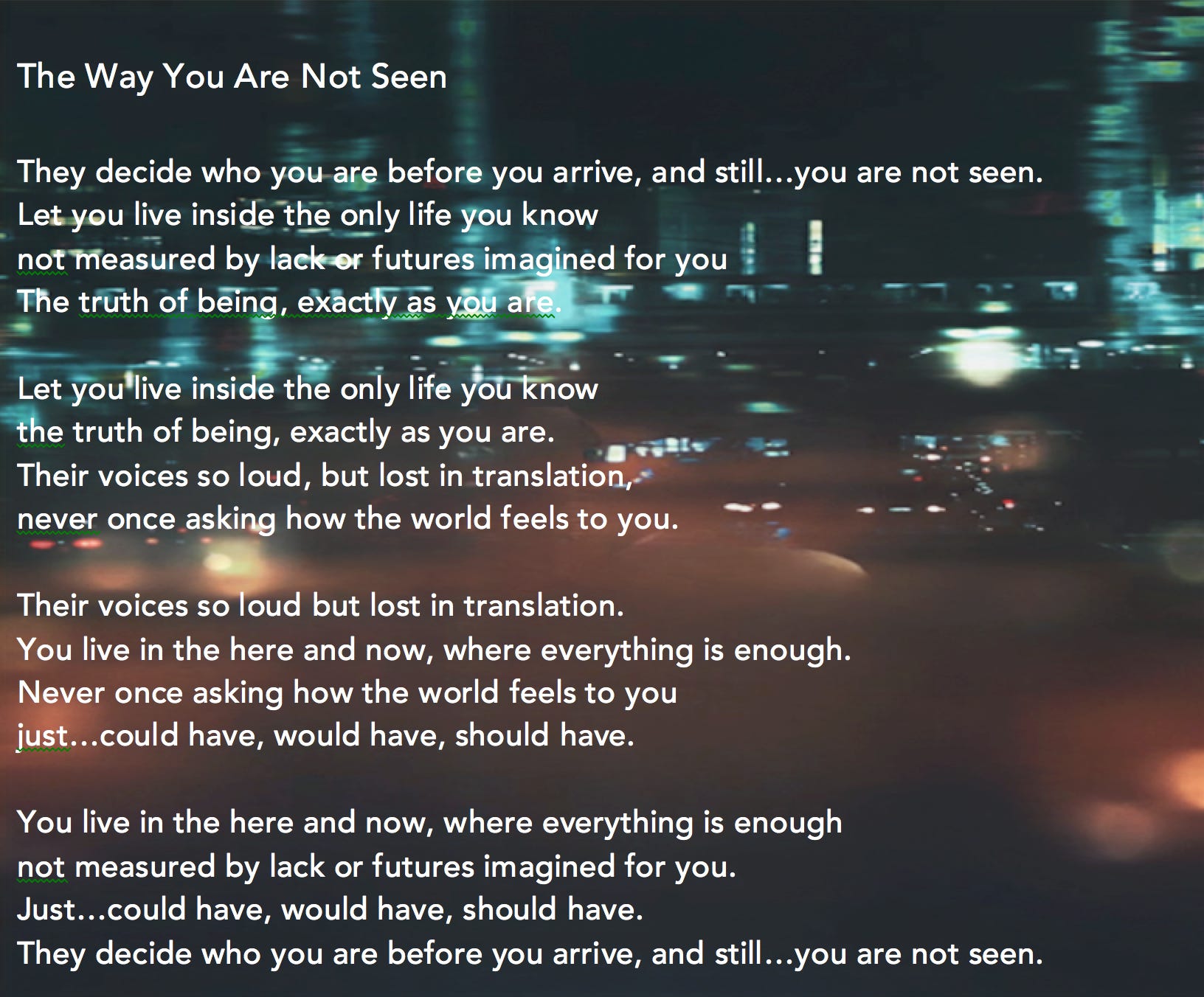
So… I wrote this poem.
Beautiful 🫶
Another brilliant post. So poingnat and relevant to all of us. Thank you ..x